
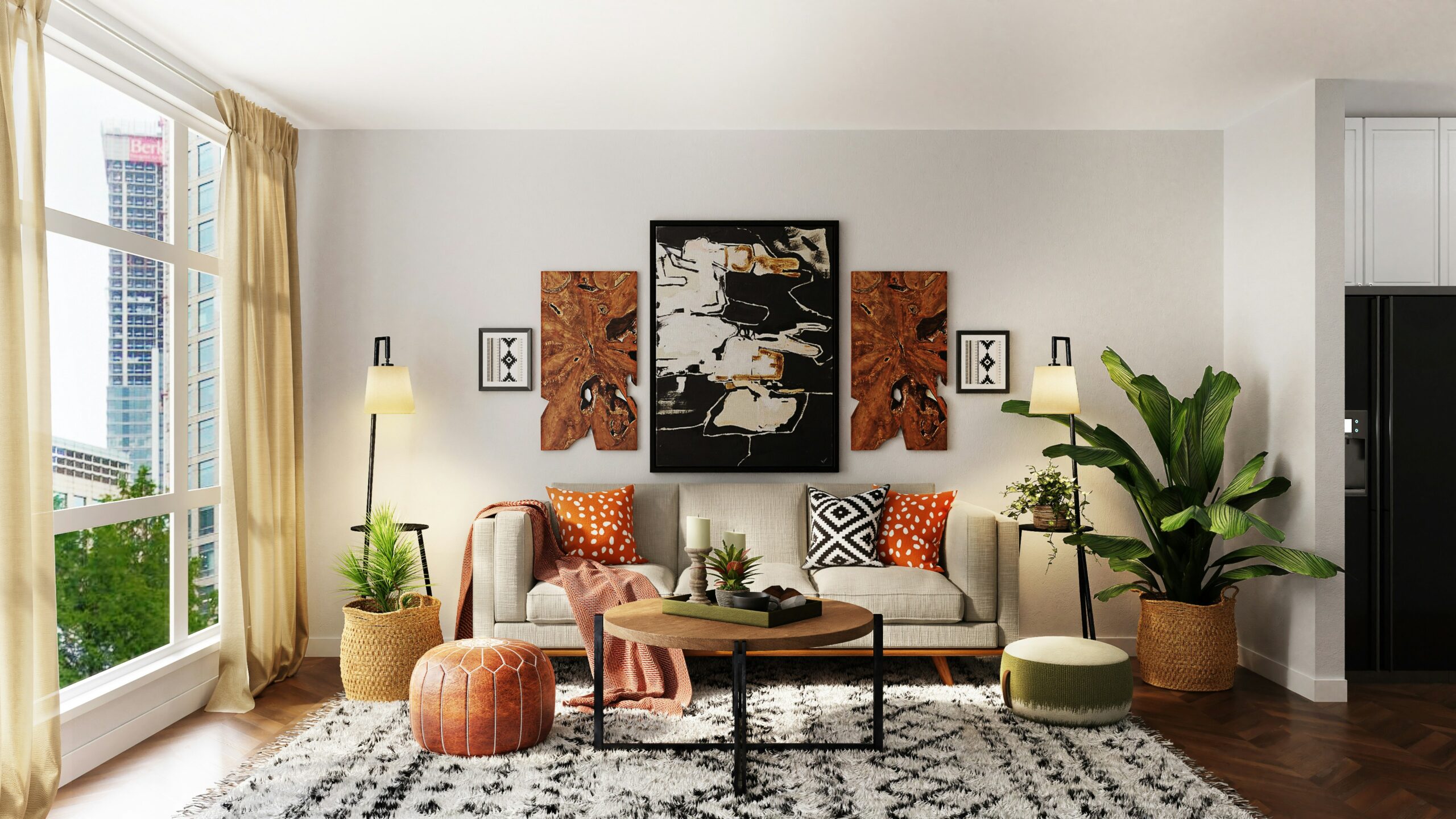
How to Blend Traditional Karnataka Aesthetics with Modern Interior Design
Karnataka has one of the richest design traditions in India. The woodwork of Mysuru, the stone craftsmanship of Belur and Halebidu, the handloom textiles of Ilkal and Molakalmuru, the brass and bronze work of Dharwad, the lacquerware of Channapatna, the intricate tile patterns of the coastal Tulu Nadu region, all of it represents a design vocabulary that has been refined over centuries and that carries a depth of craft and cultural identity that no contemporary material or technique can simply replicate. And yet most modern homes in Karnataka, particularly in cities like Bengaluru, Mangalore and Udupi, make no reference to this tradition at all. They look like modern apartments anywhere in India, or anywhere in the world, because the default language of contemporary interior design is global and largely undifferentiated.
The case for blending traditional Karnataka aesthetics with modern interior design is not about nostalgia or about recreating historical spaces in contemporary homes. It’s about the fact that design traditions rooted in a specific place, climate and culture carry intelligence that generic contemporary design doesn’t. The proportions of traditional Karnataka architecture, the materials used in coastal Karnataka homes, the craft traditions that have survived because they work, all of these carry functional wisdom alongside their aesthetic identity. A modern interior that draws on this tradition thoughtfully is both more interesting and more suited to its context than one that ignores it entirely.
At LifeSpace Interiors & Decors, based in Udupi and working across coastal Karnataka, the dialogue between traditional regional aesthetics and contemporary design thinking is something we bring to residential and commercial projects with genuine understanding of both sides of that conversation.
Understanding What Traditional Karnataka Aesthetics Actually Means
Before talking about how to blend traditional Karnataka aesthetics into a modern interior, it’s worth being specific about what that tradition actually consists of, because Karnataka’s design heritage is not a single uniform style. It’s a collection of regional traditions that differ significantly between the coastal Tulu Nadu belt, the Mysuru region, the Deccan plateau and the northern districts.
Coastal Karnataka, which includes Udupi, Mangalore and the surrounding areas, has a design tradition shaped by the monsoon climate, the availability of local materials, the influence of trade connections with the Middle East and Southeast Asia and the architectural requirements of a region that receives some of the heaviest rainfall in India. Traditional coastal Karnataka homes, known as Tulu Nadu houses or Mangalorean bungalows, are characterised by steeply pitched roofs with deep overhangs to manage the monsoon, open verandahs that allow ventilation while providing rain protection, heavy timber construction using local teak and rosewood, Mangalorean clay roof tiles, and carved wooden screens and panels that filter light and air while maintaining privacy.
The Mysuru region has a different but equally distinctive tradition centred around the elaborate woodcarving of the Mysuru royal court, inlaid furniture using rosewood and ivory, silk textiles in the deep jewel tones of Mysore silk and the architectural grandeur of the Hoysala-influenced decorative vocabulary.
Channapatna, between Bengaluru and Mysuru, is famous for lacquered wooden toys and objects that use a distinctive bright palette of red, green and yellow on natural wood, a craft tradition that dates back to the Tipu Sultan era.
Understanding which strand of Karnataka’s design tradition is being referenced in a contemporary interior matters because the results are very different, and mixing traditions without awareness of their origins produces a generic Indianness rather than a specific Karnataka identity.
Timber as the Foundation of a Karnataka-Inflected Interior
Wood is the most fundamental material in Karnataka’s design tradition, and it’s the most direct way to bring a regional aesthetic sensibility into a contemporary interior without resorting to pastiche. Traditional coastal Karnataka homes used teak and rosewood extensively for structural columns, carved screens, door frames, ceiling panels and furniture. The warmth, depth and craftsmanship visible in the woodwork of an old Tulu Nadu house is one of the defining qualities of the regional aesthetic.
In a contemporary interior, timber can carry this tradition without the decorative vocabulary of the historical architecture. The material itself, its warmth, its grain, its relationship to light, does a significant amount of work without needing to be carved or ornamented in a traditional style. A floor in solid teak, a ceiling with exposed timber beams, a kitchen with a rosewood veneer finish on the cabinet doors, a living room with a feature wall in reclaimed wood, all of these reference the material tradition of Karnataka interiors without reproducing the historical style literally.
The specific species of wood matter here. Teak is the most historically significant timber in coastal Karnataka architecture and the one that carries the most direct reference to the regional tradition. Rosewood is equally significant in the Mysuru tradition. Using these timbers in contemporary applications acknowledges the regional material heritage in a way that generic plywood or MDF with a wood-look laminate cannot.
At LifeSpace Interiors & Decors, timber specification across our projects is made with full awareness of the regional material tradition and with relationships to quality suppliers that allow us to source the right materials for projects where that heritage matters. Explore our furniture and decor projects to see how timber is used across our residential and commercial work.
Bringing in Craft Without Creating a Museum
The craft traditions of Karnataka are rich enough to fill an interior with genuine character without the space tipping into a museum of regional artefacts. The key is selectivity and placement. One or two pieces of exceptional craft in a contemporary interior carry more weight and read with more integrity than a collection of craft objects distributed throughout the space without editorial consideration.
A single piece of Channapatna lacquerware, well-chosen and placed on a surface where it can be seen clearly, tells a more coherent design story than a dozen smaller pieces scattered across multiple rooms. A handwoven Ilkal or Molakalmuru textile used as a throw or a cushion cover in a living room that’s otherwise contemporary in its material direction introduces the textile tradition of Karnataka without making the room feel themed.
Traditional Karnataka brasswork, the oil lamps, the ritual vessels, the decorative objects that appear in both domestic and religious contexts across the region, translate well into contemporary interiors when they’re treated as sculptural objects rather than functional items. A large brass lamp placed as a floor object in a living room corner, or a collection of brass vessels grouped on a console table, brings the craft tradition of Karnataka metalwork into a contemporary context without looking decorative in the negative sense of that word.
Carved wooden panels from old dismantled homes and buildings, which are available through heritage material dealers across Karnataka, can be incorporated into contemporary interiors as wall panels, door inserts, cabinet fronts or standalone decorative elements. A single carved panel mounted on an otherwise plain contemporary wall creates a dialogue between the old and the new that’s more interesting than either a fully traditional or a fully contemporary approach could achieve independently.
The Courtyard and Verandah Principle in Contemporary Floor Plans
Traditional Karnataka residential architecture, particularly in the coastal region, organised space around two principles that contemporary interior design has largely abandoned: the central courtyard, which provided light, ventilation and a spatial heart to the home, and the verandah, which created a transitional zone between the exterior and the interior that managed both climate and social interaction.
These principles cannot always be reproduced literally in a contemporary apartment or a compact residential plot, but the spatial intelligence they represent can be translated into contemporary floor plan decisions that produce similar effects.
The courtyard principle, the idea of an open central space that all other rooms relate to, can be interpreted in a contemporary floor plan as an open living and dining area that serves as the connective heart of the home, with all other rooms arranged around it. The quality of light that a courtyard brought to a traditional home can be approximated through skylights, light wells or full-height windows in the central living area that distribute natural light into adjacent spaces.
The verandah principle, a covered transitional space between outside and inside, can be interpreted as a covered balcony, a screened sitting area or an extended entrance zone that creates a sense of arrival and transition before reaching the main living areas. In coastal Karnataka where the climate makes outdoor living difficult for much of the year due to heat and rain, a covered transitional space that allows some connection to the outside without full exposure to the elements is both climatically intelligent and culturally resonant.
At LifeSpace Interiors & Decors, spatial planning for residential projects in Udupi and coastal Karnataka considers the regional climate and the spatial intelligence of traditional architecture explicitly. Explore our design services to see how we approach spatial planning for projects in this region.
Colour Informed by the Regional Palette
Traditional Karnataka architecture and craft have a colour palette that’s distinct from other regional Indian traditions. The ochres and reds of Mangalorean clay tiles, the deep greens of the coastal forest backdrop, the warm honey tones of aged teak, the deep jewel colours of Karnataka silks, the terracotta of traditional plasterwork, all of these create a regional colour vocabulary that can inform a contemporary interior palette without reproducing the historical colour schemes literally.
A contemporary interior that draws on this regional palette uses these colours as considered accents rather than dominant fields. A wall in a deep terracotta tone in a living room that’s otherwise warm neutral in its palette references the regional colour tradition without feeling traditional in a literal sense. A silk cushion in the deep red or purple of Mysore silk against a sofa in a warm contemporary tone brings the textile colour tradition of Karnataka into a modern context elegantly.
The greens of coastal Karnataka, the deep forest greens, the grey-greens of coastal vegetation, the muted olive tones of the landscape, translate particularly well into contemporary interior colour palettes for homes in this region. A bedroom in a soft, muted sage or a living room with a feature wall in a deep forest green references the landscape of coastal Karnataka in a way that feels both contemporary and specifically rooted in place.
Flooring That References the Regional Material Tradition
Traditional Karnataka homes used a range of flooring materials that are difficult to reproduce in contemporary construction but whose aesthetic character can be referenced through contemporary alternatives. Red oxide flooring, a traditional finish made from cement and iron oxide pigment, was the default floor treatment in most traditional homes across coastal Karnataka and the Deccan region. It has a particular quality of colour and finish, a warm, deep red with a slightly uneven surface that absorbs and reflects light differently from any manufactured tile, that is immediately recognisable as regionally specific.
Contemporary red oxide flooring, applied using modern materials and techniques, is available and creates the same aesthetic effect as the traditional version with better durability and easier maintenance. In a contemporary interior, a red oxide floor in the entrance hall or the kitchen references the regional tradition directly without requiring any other explicitly traditional elements to make the reference legible.
Kotah stone, a natural stone quarried in Rajasthan but widely used in Karnataka traditional architecture, has a grey-green tone and a fine grain that works well in contemporary interiors. It references the material tradition of the region without being directly associated with a specific historical style.
Mangalorean tiles, the distinctive terracotta roof tiles that define the skyline of coastal Karnataka towns, are occasionally used as flooring material in contemporary interiors and carry an immediate and powerful regional reference. Their use as flooring is non-traditional but the material itself is so strongly associated with the region that the reference is clear.
The Contemporary Karnataka Home: A Practical Approach
Blending traditional Karnataka aesthetics with contemporary interior design doesn’t require a comprehensive programme of regional references throughout the home. It requires a small number of deliberate, well-considered decisions that introduce the regional tradition at key points in the interior in a way that’s specific and intentional rather than generic.
Choosing timber species with regional significance over generic alternatives is the most fundamental decision. Using one or two pieces of exceptional regional craft as focal points in the main living areas is the most direct way to introduce the aesthetic tradition. Selecting a colour palette that references the regional landscape and material culture rather than defaulting to the global contemporary palette creates a ground that makes all the other references more legible. And designing transitional spaces that acknowledge the spatial intelligence of traditional Karnataka architecture, however interpreted for a contemporary context, gives the home a spatial character that goes beyond surface decoration.
At LifeSpace Interiors & Decors, this dialogue between regional tradition and contemporary design is part of how we think about residential projects in coastal Karnataka. It’s not something we impose on every project, but it’s a conversation we’re equipped to have with clients who want their home to feel genuinely rooted in the place it occupies rather than interchangeable with an apartment anywhere else in the country.
Contact our team to discuss your residential project and explore how traditional Karnataka aesthetics can be brought into a contemporary interior in a way that feels considered and specific rather than nostalgic or decorative.
You can also browse our completed residential and turnkey projects to see the standard of design thinking and execution we bring to homes in this region.
Conclusion
Blending traditional Karnataka aesthetics with modern interior design is not about recreating the past in a contemporary home. It is about bringing the intelligence, the craft, the material richness and the spatial wisdom of a specific regional tradition into dialogue with the practical and aesthetic requirements of contemporary life. Done well, this dialogue produces interiors that are more interesting, more culturally grounded and more specifically suited to their place than any generic contemporary approach can achieve. At LifeSpace Interiors & Decors, it is a conversation we bring to every project in coastal Karnataka where the client wants a home that feels genuinely of this place, not merely located in it.
To learn more about our full range of residential interior design services, visit our Services page or explore our PMC project capabilities to understand how we manage every aspect of a regional interior project from planning through to completion.
For further reading on Karnataka’s design and craft traditions, Architectural Digest India regularly features projects that draw on regional Indian design traditions in contemporary interiors. The Karnataka Handicrafts Development Corporation is also a useful resource for understanding the range and quality of craft traditions available from across the state.